
U.S. Solar SEO: Turn Local Searches Into Better Inquiries
 Solar shoppers in the United States often start with a local search, such as “solar installer near me” or “solar panels for homes.” A company may appear in those results and still miss the inquiry if its service area is unclear, its pages lack useful details, or the next step feels like a commitment before the visitor is ready.
Effective solar SEO connects discovery to a practical next step. It helps the right people find accurate local information, understand whether a company serves their property, and decide how to ask a question or request an assessment. No single ranking tactic guarantees leads, but a clear search experience can reduce friction for people who are already considering solar.
Why solar search visibility does not always bring qualified inquiries
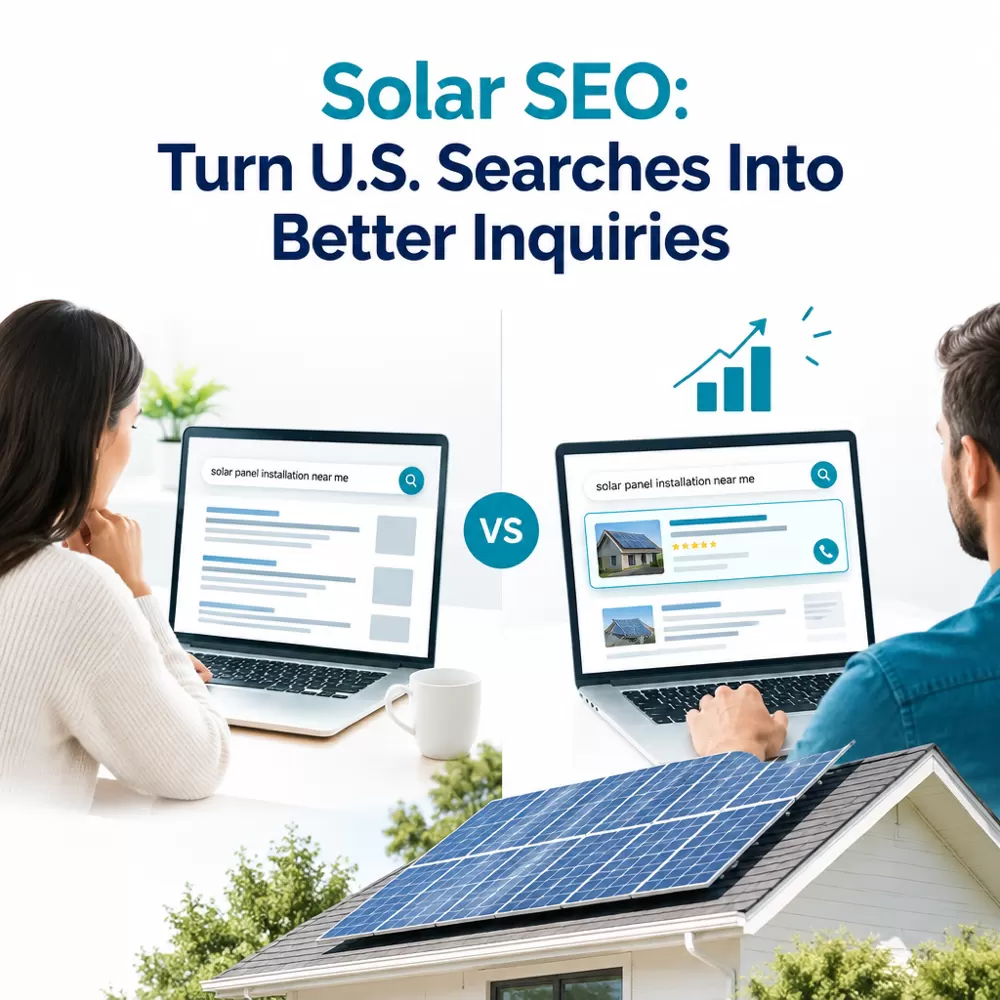
Solar is a considered purchase. Prospects may compare installation options, check whether a provider serves their location, and look for answers about the process before contacting a company. A visit from someone outside the service area, or from a person looking for general information, is not the same as a viable sales inquiry.
That is why traffic alone is an incomplete measure of SEO performance. A useful strategy looks at whether a page reaches relevant searchers and helps them take an appropriate action. That action might be calling, submitting a form, or reviewing the company’s service-area information before getting in touch.
Start by checking the path a local visitor takes:
- Does the search result describe the service and location clearly?
- Can a visitor quickly confirm that the company serves their city or county?
- Does the page explain what happens after someone calls or submits a form?
- Are contact details easy to find on a phone?
If these basics are missing, more visibility may simply send more people into a confusing experience. Addressing them gives searchers a better reason to continue, while helping the business distinguish relevant prospects from unrelated traffic.
Local SEO for solar companies in the United States
Local SEO helps search engines and potential customers understand where a business operates and which services it provides. For solar companies, that means keeping business information accurate and making service coverage understandable without suggesting that an office exists in every town served.
Keep your Google Business Profile accurate
Review the company name, phone number, website, business category, hours, and service-area details in Google Business Profile. Use the profile to represent the real business, not a collection of target keywords. If customers do not visit a staffed office, do not present a residential or virtual address as a public storefront. Check that the profile’s contact information matches the website.
Make service areas and reviews credible
List the places the team genuinely serves and make those boundaries easy to understand. A solar company working across several counties can explain its coverage on the main service-area page and name relevant cities where there is useful information to share. Avoid creating near-identical pages that only swap a place name. Those pages give visitors little reason to trust the information and can make the site harder to navigate.
Also check business name, address, and phone number (NAP) details in important directories and across your own site. Old phone numbers or conflicting addresses can confuse customers. Prioritize correcting the core business information rather than chasing every directory listing.
Connect local visibility to a clear inquiry path
Location-specific pages work best when they answer real questions for people in that place. A useful page might explain which communities the company serves, how a site assessment is arranged, and what information a homeowner should have ready. Keep claims grounded in what the business can verify. If permitting, utility arrangements, or installation options vary by location, explain that the details depend on the property and local requirements.
For businesses reviewing their organic search approach, seo for solar companies can include technical fixes, local visibility, helpful content, ethical link building, and reporting tied to leads. SEO Deep Insights also describes its work in Answer Engine Optimization (AEO), which helps content respond clearly to questions, and Generative Engine Optimization (GEO), which focuses on visibility in AI-generated search experiences. These activities can support discovery, but the site still needs accurate service information and a straightforward way to contact the team.
Technical SEO supports this path as well. Check that important pages load and work properly on mobile, that contact forms submit successfully, and that search engines can access the pages intended to appear in results. Broken forms or unclear navigation can undermine the value of local visibility, even if a page is relevant to the search.
Measure lead quality and improve the pages that matter
Track more than rankings and total organic sessions. Review calls and form submissions from organic search, the locations prospects mention, and whether inquiries match the services the company offers. Use call tracking carefully so the business can understand which channels contribute, while keeping displayed phone details consistent where accuracy matters.
A practical first step is to review one priority service area from a searcher’s perspective. Check the business profile, the matching website page, mobile contact options, and the way inquiries are recorded. Fix inaccurate details first, then improve gaps in coverage and content. This steady process makes local search a more useful route from discovery to a qualified conversation, without promising that any one update will produce a particular ranking or lead volume.